

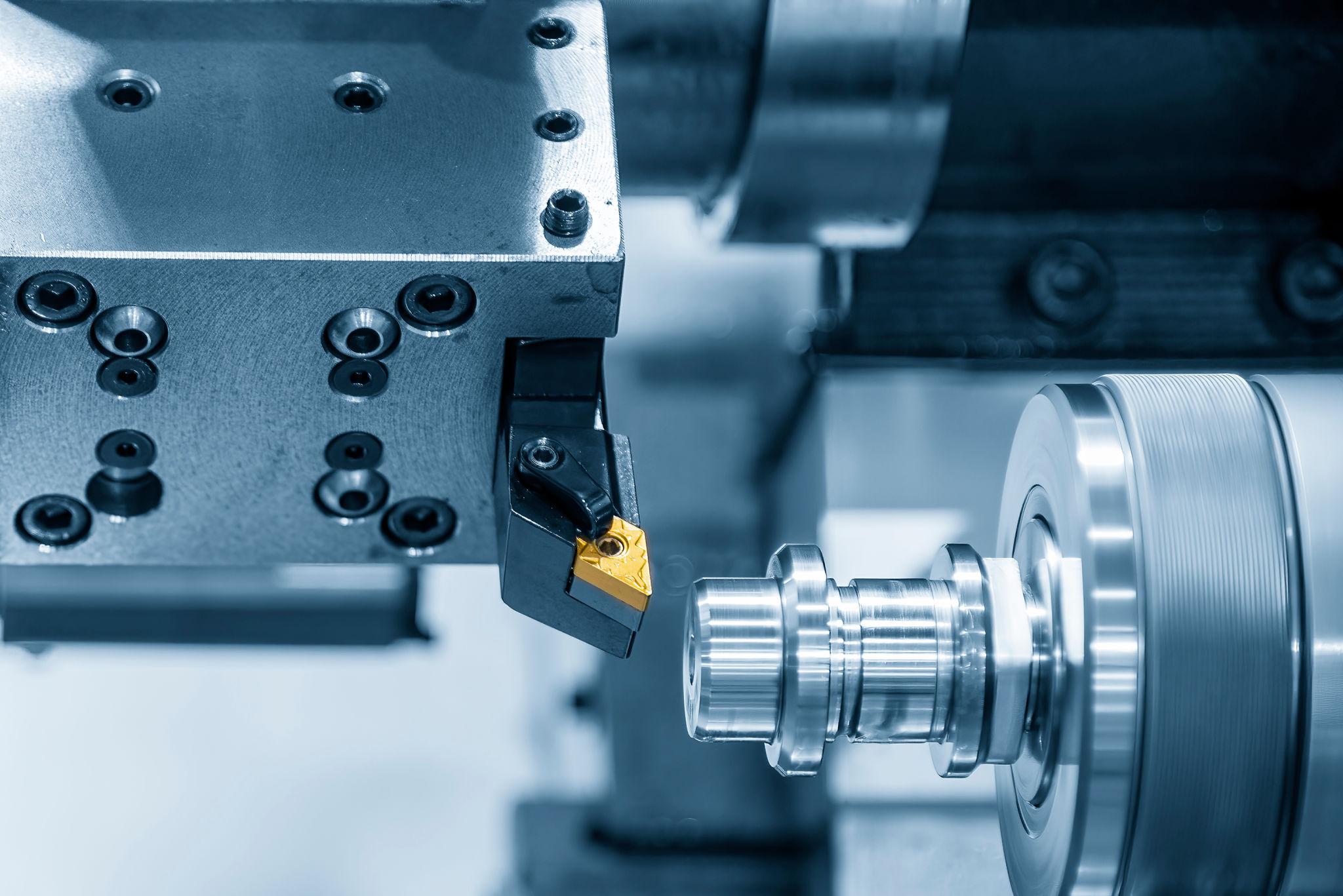
With the global CNC machine market surpassing $100 billion and manufacturers racing to automate — a PwC report projects the share of highly automated production lines will more than double by 2030, from 18% to 50% — one truth holds firm: no automation can compensate for a bad OP10. That is exactly why face and center machining matters more today than ever.
Face and Center machining is the first operation in any shaft production sequence. It decides whether every step that follows runs true — or compounds error.
This guide explains what a facing and centering machine actually does, why the operation sets the ceiling for everything downstream, and what modern alternatives look like in 2026.
A Face and Center machine performs two operations on a raw shaft blank in a single clamping: it faces (squares off) both end surfaces, and centers (drills precise reference holes into) both faces.
Those center holes are the datum reference for every subsequent operation. Every lathe, grinder, or thread roller that touches the part locates from these centers. If they are off by even 0.05 mm, the error propagates — magnified — through the entire production chain.
In lean manufacturing and CNC production planning, this first operation is formally called OP10 — Operation 10, and a facing and centering machine is built to handle both jobs in one pass. No downstream process can correct a misaligned center hole, so understanding each operation clarifies why combining them is the heart of face and center machining:
For decades, dedicated facing and centering machines — including well-known legacy brands like Hey (the #3 and similar models) — handled OP10 on production floors across Europe and Asia. These machines were purpose-built and highly effective for their era. Today, however, the landscape has fundamentally changed.
| Capability | Legacy Facing & Centering Machine | FASTCUT Center Drive Lathe |
|---|---|---|
| Face both ends | Sequential, two setups | ✓ Simultaneous |
| Drill center holes | Separate operation | ✓ Same cycle |
| Part re-clamping required | Yes — risk of misalignment | ✓ Eliminated |
| CNC programmable | Limited or none | ✓ Full CNC control |
| Robot / automation integration | Complex retrofit required | ✓ Native support |
| Mixed shaft diameter flexibility | Fixed tooling, limited range | ✓ Program changeover |
The center drive advantage. A center drive lathe grips the workpiece at its center — not at its ends — leaving both faces fully accessible for simultaneous machining. The result: facing, centering, chamfering, and even diameter turning operations complete on both ends in a single, uninterrupted cycle. This is not an incremental improvement. It is a fundamentally different approach to face and center machining at OP10.
Any manufacturer producing shafts, axles, rods, or cylindrical components at volume depends on accurate face and center machining. The fields where it is most critical include:
In each case, investing in a capable face and center machine — or center drive lathe — pays back immediately in reduced scrap, faster cycle times, and downstream reliability.
Legacy facing and centering machines still running today — many of them Hey #3 and comparable units — are often 30–50 years old. They were engineered to last, but never designed for high-mix CNC production, robotic loading, or Industry 4.0 connectivity.
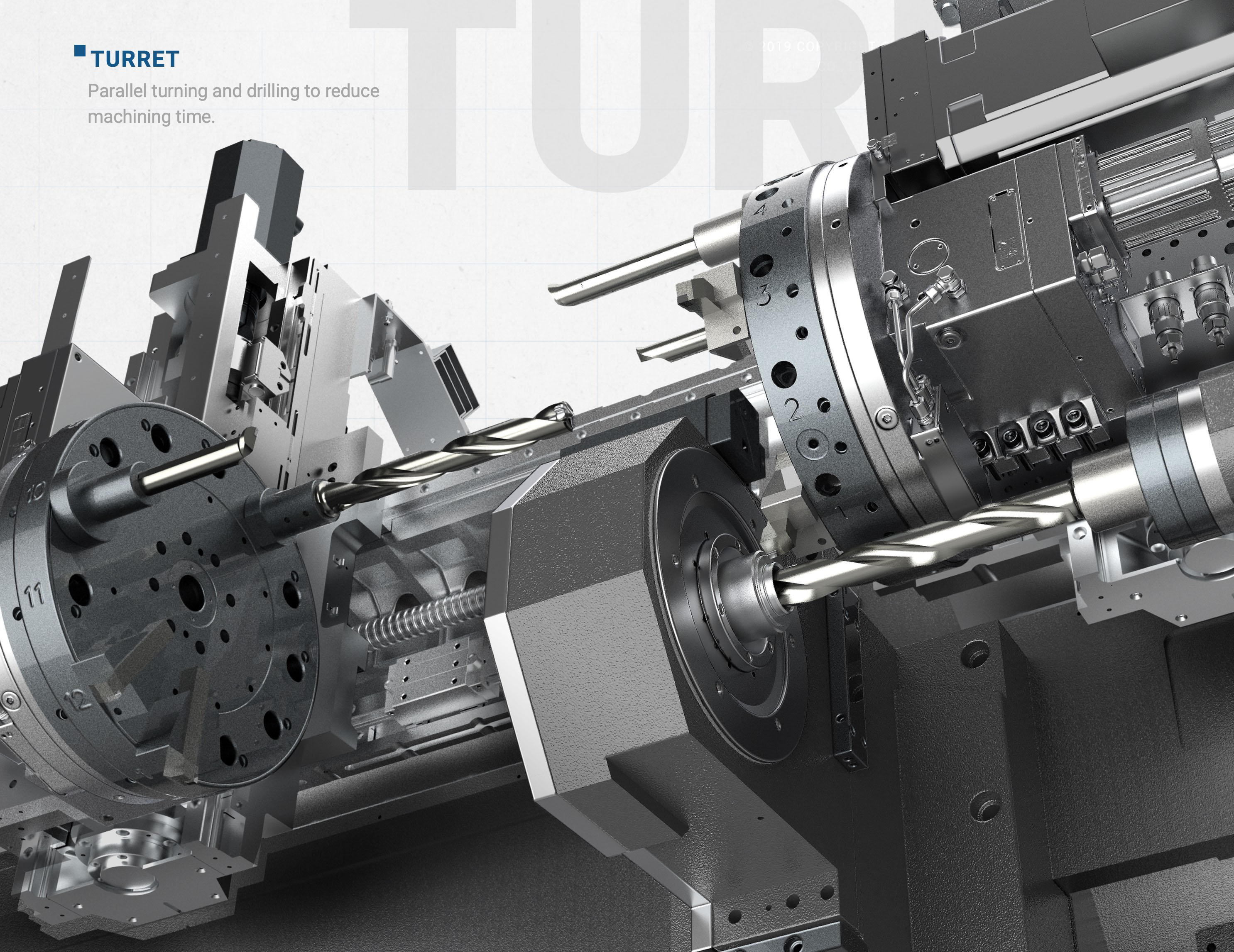
The hidden cost of staying with legacy equipment grows each year. Spare parts become scarce. Cycle times that were competitive in 1990 are now production bottlenecks. When you can't integrate OP10 into your automated line, you can't automate your line — period. Modern center drive lathes don't just replace a Hey machine or facing and centering machine; they unlock the automation potential of everything downstream.
For a closer look at our approach, explore our production technology and the center drive lathe that replaces traditional face and center machining setups and cuts OP10 cycle time by up to 60%.
For broader reference on the control systems behind modern OP10, readers may review public resources such as CNC / Numerical Control.
Q: What is Face and Center machining in simple terms?
It is the first machining operation (OP10) on a shaft blank, squaring off both end faces and drilling precise center holes that serve as the datum reference for every later turning, grinding, and threading step.
Q: Why is Face and Center machining so critical to quality?
Because no downstream process can correct a misaligned center hole. A center off by even 0.05 mm propagates through the whole production chain, so OP10 effectively caps the achievable accuracy of the finished part.
Q: Can a center drive lathe replace a Hey machine for Face and Center machining?
Yes. A Fastcut center drive lathe performs the same facing and centering work as a Hey #3, but with full CNC control, native automation support, and both ends machined in one cycle — making it a direct upgrade path for aging Hey machines.
Q: How much cycle time can modern Face and Center machining save?
By facing, centering, and chamfering both ends in a single uninterrupted cycle — rather than across two sequential setups — a center drive lathe can cut OP10 cycle time by up to 60%.
If you are based in the North America , feel free to reach out to our local partner

|